Summary: Smoking and Vaping in Indiana
This summary shares findings and recommendations from four reports that identify the most effective policies for decreasing smoking and vaping rates.

This summary shares findings and recommendations from four reports that identify the most effective policies for decreasing smoking and vaping rates.

Indiana has the seventh-highest vaping rate in the country. The study’s findings show vaping comes with considerable health and economic consequences, including impaired brain development and increased healthcare costs. The report also highlights recommendations for key stakeholder groups.

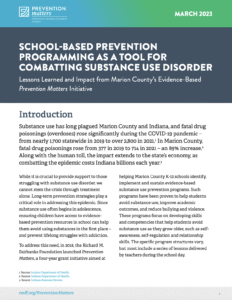
Outcomes and key lessons from Prevention Matters, a five-year initiative funding school-based substance use prevention in Marion County. Includes best practices for effective implementation and recommendation for funders.

Reducing tobacco use in Indiana—where smoking rates remain higher than the national average—would not only save lives but also drive substantial economic gains in the state, including population growth, added jobs, and higher incomes.

Indiana has the eighth-highest rate of smoking in the country, and 11,000 Hoosiers die each year from smoking-related diseases. The report includes several findings, including that a $2 per pack tax on cigarettes could decrease the state’s smoking rate while also saving money and generating revenue.

From extra absenteeism and unsanctioned smoking breaks to excess healthcare costs, employees who smoke cost Indiana employers $3.1 billion annually. This report explores the hidden “smoking tax” paid by Hoosier employers.

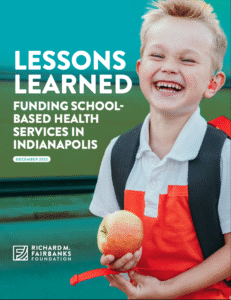
Healthy students make better learners and are more likely to see positive academic outcomes. Based on the Fairbanks Foundation’s historical funding for school-based health services, this lessons learned document offers guidance for future implementation efforts by schools and healthcare providers.

Evidence shows that investing in public health is correlated with longer lifespans and lower spending on health care. This report examines the state’s current public health system and provides recommendations for restructuring it to achieve better outcomes

In 2016, the Richard M. Fairbanks Foundation awarded a $700,000 grant to Eskenazi Health to support the expansion of an innovative pilot program designed to address the opioid crisis. Get details on the program and its impact in this evaulation.

Opioid use disorder (OUD) is a serious concern both nationally and in Marion County, Indiana. This report provides an in-depth analysis of treatment capacity and access in Marion County, as well as barriers to treatment for people with OUD.